

Solutions through technology:Website DevelopmentDigital MarketingMarketing Strategy
STRATEGY
Strategy answers the question ‘How do we get there?’ and defines elements to achieve digital marketing objectives using a range of tactical e-tools and a revised marketing mix. It is the development of a basic structure for your digital marketing campaign comprising of an undetailed plan of action over a defined period of time that addresses the company’s objectives and its feasibility taking into account the organisations capabilities.
The aim is to combine strategy theory and digital marketing to leverage technology to gain a disruptive competitive advantage. The initial step is to perform business model audits using business tools to highlight the areas of the business that are receptive to digital transformation. An essential part of the audit will require a deep analysis of your business model in order to understand the areas where these technologies are business critical and can be leveraged to create a competitive advantage. The Business Model Canvas (Dr. Alex Osterwalder & Dr. Yves Pigneur) is one such business tool and can be applied to a digital marketing framework.
ACCOUNTANT
Click to view what your new website could look like and to generate design ideas...
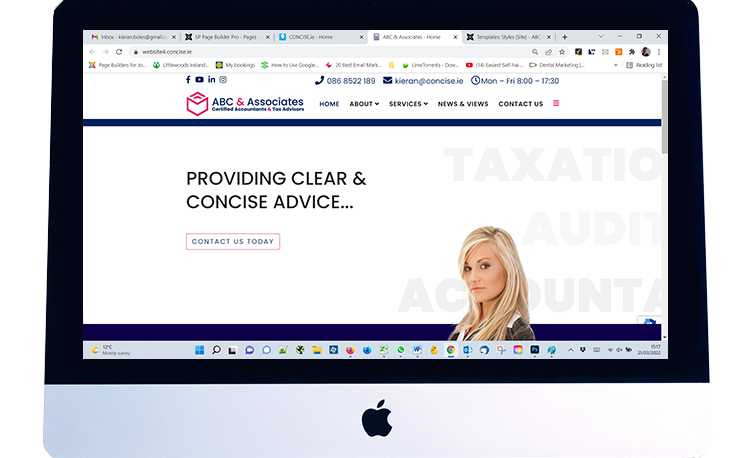
ARCHITECT
Click to view what your new website could look like and to generate design ideas...

BARBER SHOP
Click to view what your new website could look like and to generate design ideas...

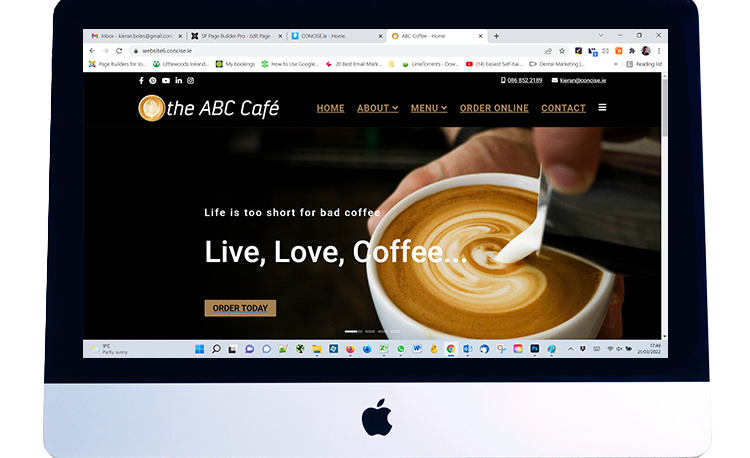
COFFEE SHOP
Click to view what your new website could look like and to generate design ideas...
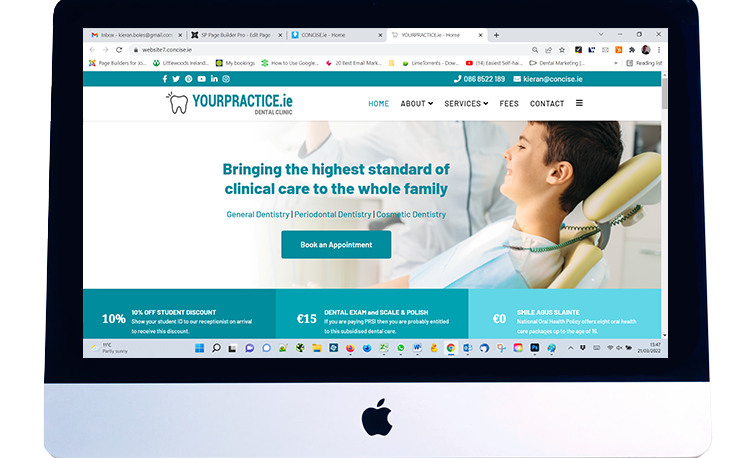
DENTAL CLINIC 1
Click to view what your new website could look like and to generate design ideas...
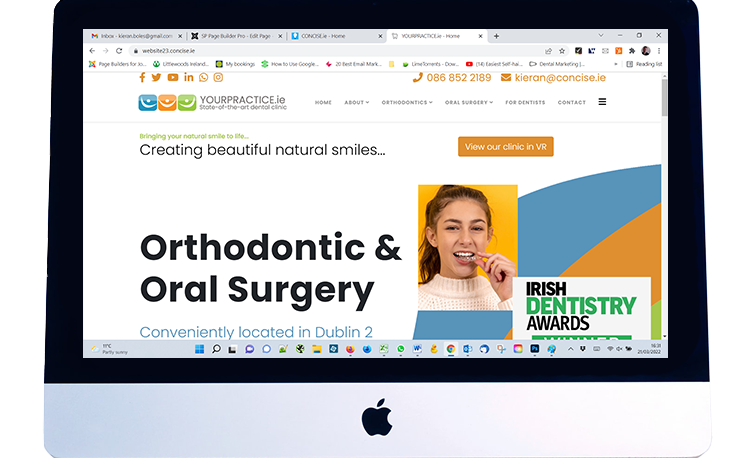
DENTAL CLINIC 2
Click to view what your new website could look like and to generate design ideas...
EVENTS
Click to view what your new website could look like and to generate design ideas...
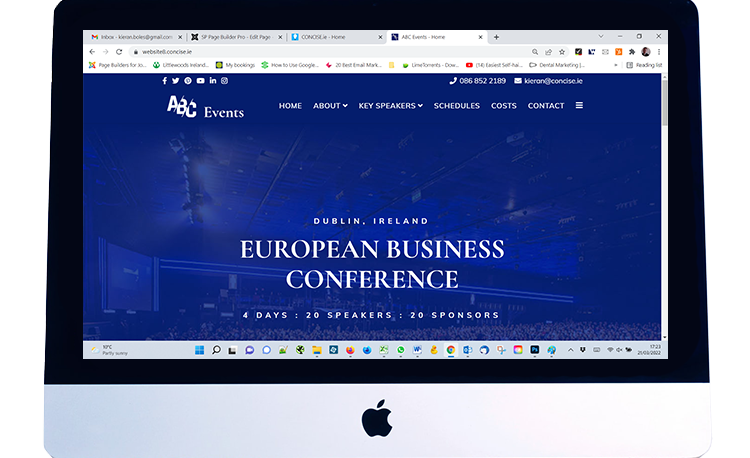
FINANCE 1
Click to view what your new website could look like and to generate design ideas...
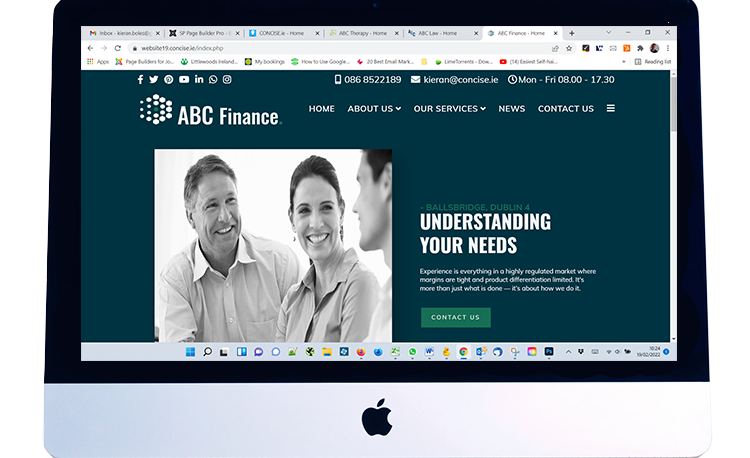
FINANCE 2
Click to view what your new website could look like and to generate design ideas...
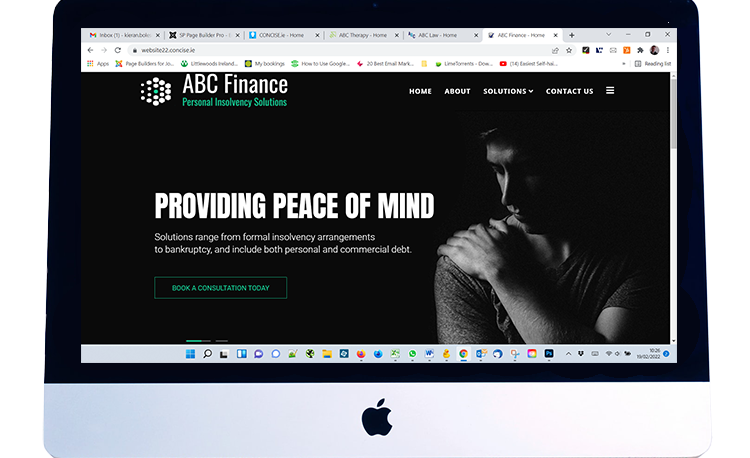
FITNESS
Click to view what your new website could look like and to generate design ideas...
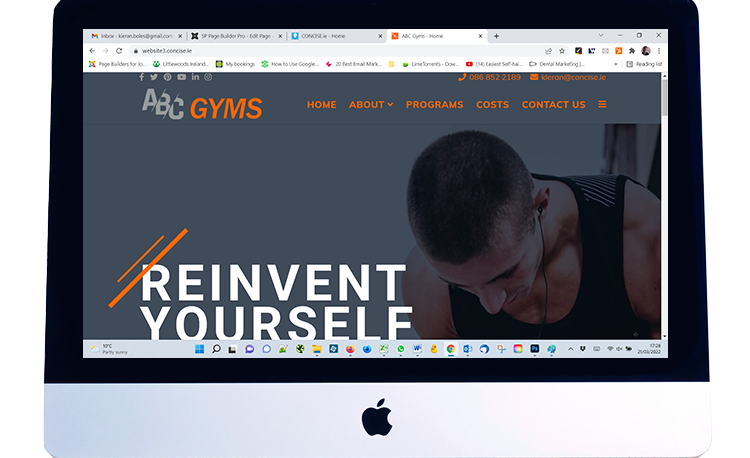
INTERIOR DESIGN
Click to view what your new website could look like and to generate design ideas...
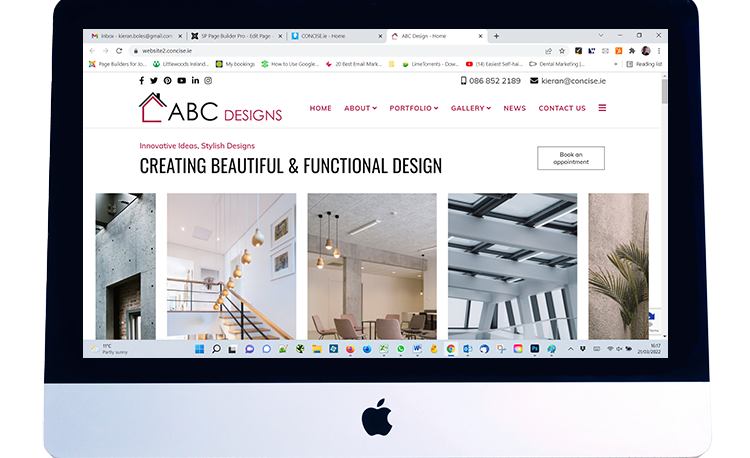
LAW 1
Click to view what your new website could look like and to generate design ideas...
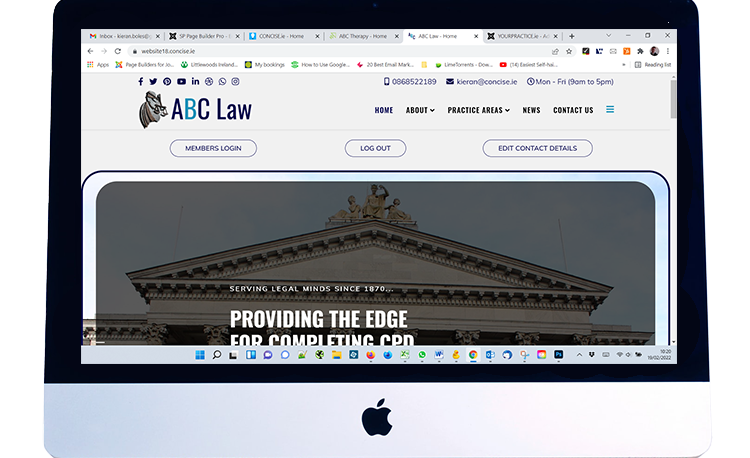
MEDICAL CLINIC 1
Click to view what your new website could look like and to generate design ideas...
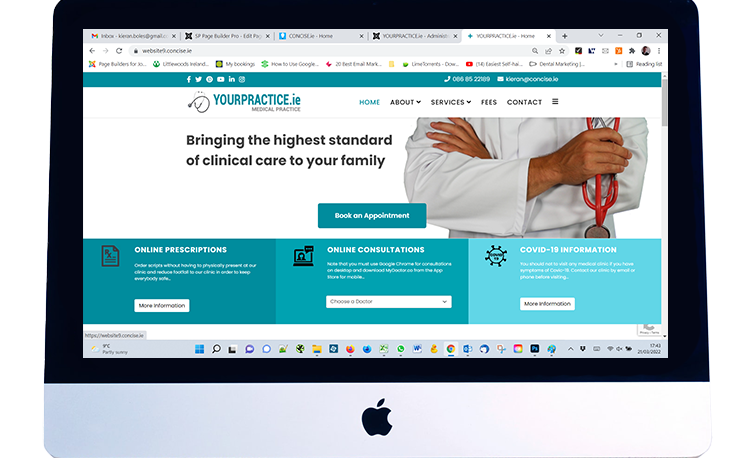
MEDICAL CLINIC 2
Click to view what your new website could look like and to generate design ideas...

PROPERTY
Click to view what your new website could look like and to generate design ideas...
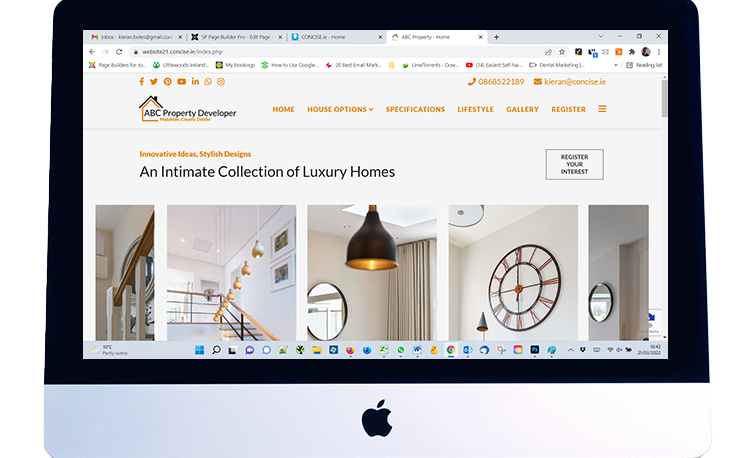
RESTAURANT 1
Click to view what your new website could look like and to generate design ideas...
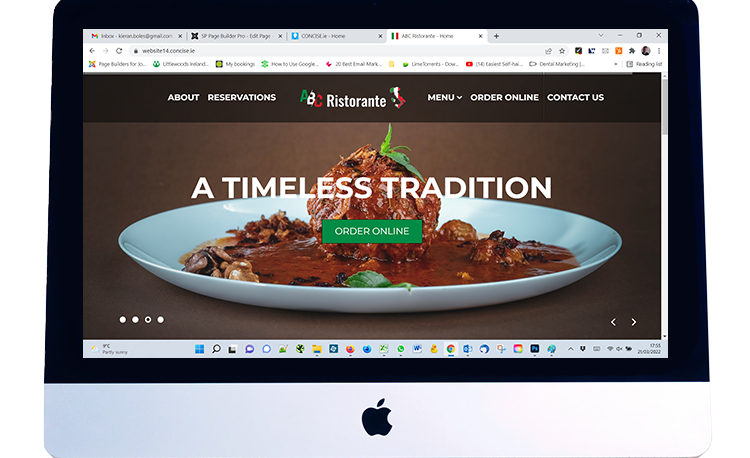
RESTAURANT 2
Click to view what your new website could look like and to generate design ideas...
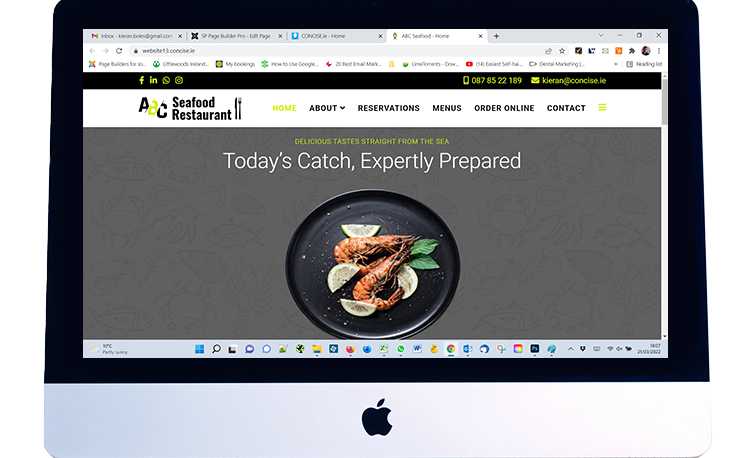
RESTAURANT 3
Click to view what your new website could look like and to generate design ideas...
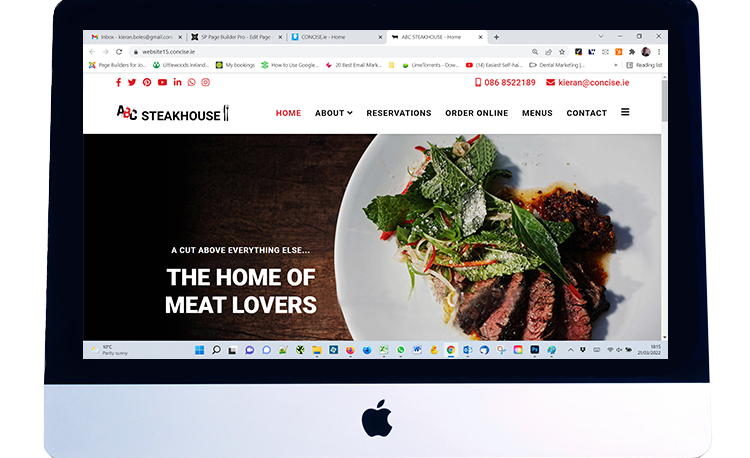
MENTAL HEALTH
Click to view what your new website could look like and to generate design ideas...
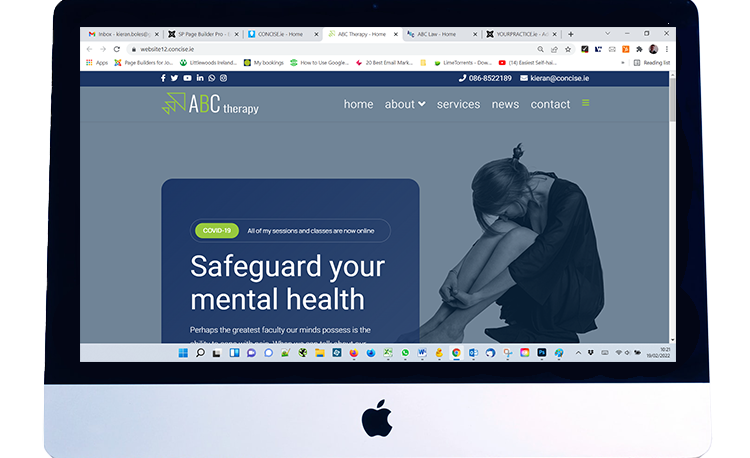
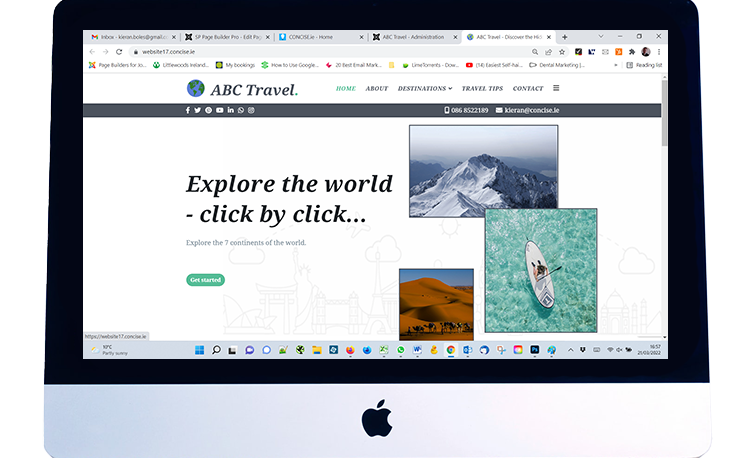
TRAVEL
Click to view what your new website could look like and to generate design ideas...
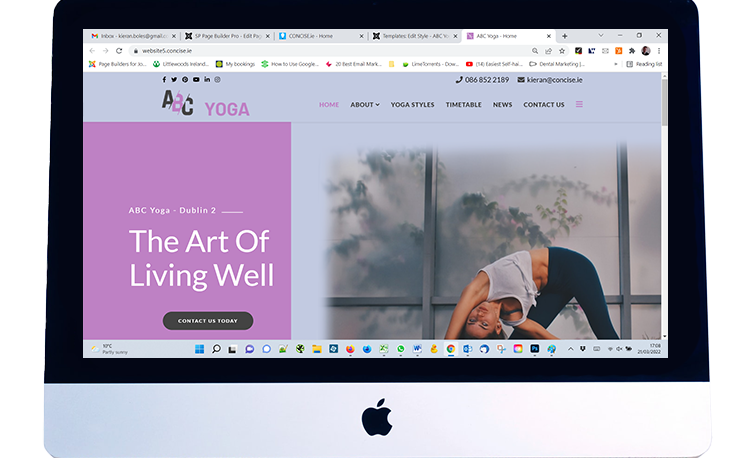
YOGA
Click to view what your new website could look like and to generate design ideas...
Questions answered through a well-developed ‘SMART’ strategy would include;
- How will the sales objectives be delivered?
- Which customer segments will be targeted with what value propositions?
- What communications strategies will be used to support customer acquisition, conversion and retention?
- Which marketing mix will be used to acquire new customers?
- Which customer relations strategy will be used for customer retention?
- Will the online customer proposition be different to the offline one?

The aim is to integrate all the stages listed below in order to create a meaningful strategy that will achieve all the objectives that the business has set for each digital marketing campaign. Consequently the strategy is created by determining what must be done for the following stages;
- Brand strategy - identifies the firm’s service from competitors. It should be distinctive with the aim of being instantly relatable to the service provided thereby instilling a sense of trust and loyalty. A brand is developed through the images, digital messages and how customers respond to the service and their subsequent opinions of the firm versus competitors’ brands.
- Market segmentation – who exactly does the business plan to target with their digital marketing campaign i.e. Irish or English, seniors or adults, males or females?
- Value proposition – what is the proposition the marketing campaign is making towards the consumer? Value propositions are composed of a “marketing mix” of what the product is, the price of the product, how much promotion the product is receiving and where exactly you can acquire the product. Both the proposition and marketing mix is used in an attempt to entice the consumer to use the service.
- Online representation – examines the range of online presence that the firm currently has i.e. website, email, social media and mobile and what exactly it is you’re currently doing with these forms of online media. It then attempts to find other ways of doing it differently or in a more improved way to gain more attention online and achieve more exposure.
- Content management – examines the content that the business is currently sending out and attempts to improve the content to be more relevant, interesting or helpful in order to captivate the targeted audience.
- Conversion - deciding how you plan to convert consumers such as through the provision of incentives.
- Retention – keeping your customer’s attention once you have acquired it through your digital campaign. This involves creating consistent high quality content that is engaging and relevant to the consumers’ interests.
The starting point for a strategic marketing plan should be the identification of all the possible revenue streams that are available and add-value to the firm. Only then can you develop a series or set of hypotheses that allows us to organise our thinking in terms of the relevant market segments to focus the tactical tools on, for each of the profitable revenue streams. In other words the market segment determines the marketing mix.
Key strategy components to consider include;- Revenue streams – defines the customer segments that are being targeted? How do we break the market into segments and who are going to be targeted to develop each revenue stream? What is the target market for each identified revenue stream?
- Objectives – ensure that the strategic decisions are aligned to the objectives.
- Positioning – develop an exact position in the market place through the identification of the value propositions.
- Sequence – there should be a sequence for tactical tools. For example do we need to develop credibility before raising visibility such as developing a credible mobile app before raising the visibility and generating a lot of traffic?
- Acquisition or Retention – is there an emphasis on acquiring new customers, or on customer retention and increasing the average spend. Customer acquisition requires a different emphasis on tactical tools such as natural search, paid search and display ads compared to a customer retention tool such as an email campaign.
- Tactical tools– the mix of both online and off-line tactical tools will be decided by our strategic decisions i.e. click or brick.
- Integration – the web site processes and all the customer touch points (from social media, app sign-up forms, online registration details or even telemarketing) should be integrated into the database. The aim should be to deal with every subscriber in the database as a recognizable individual with unique preferences regardless of how the customer comes into contact with the company.
- Social media – it is more than a tactical e-tool as it can become a platform for listening to and engaging with customers. Content strategy should include social media by determining what topics will be published in which media on what platforms.