

Solutions through technology:Website DevelopmentDigital MarketingMarketing Strategy
How to develop a strategic, results-orientated digital marketing plan for your firm...
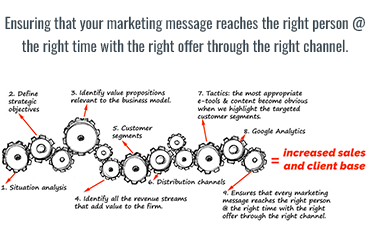
A strategic marketing plan requires the identification of all the possible value propositions that are available and add-value to the firm. Only then can you develop a series or set of hypotheses that allows us to organise our thinking in terms of the relevant market segments to focus the tactical tools on, for each of the identified profitable revenue streams. The market segments determine the marketing mix for each value proposition.
A market segment is a group of consumers who respond in a similar way to marketing efforts [1]. Consumers can be grouped in various ways based on demographic, psychological, geographic and behavioural factors. After segmentation is complete, target markets should be chosen from all the suitable segments. This involves evaluating each market segment’s attractiveness and then selecting one or more segments to engage.
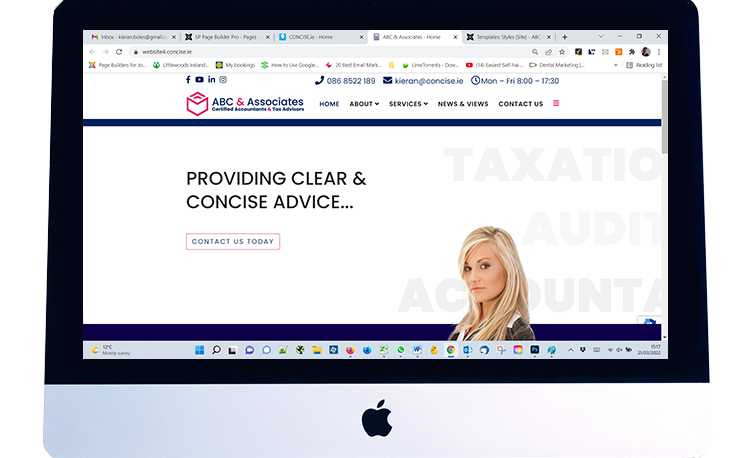
ACCOUNTANT
Click to view what your new website could look like and to generate design ideas...
ARCHITECT
Click to view what your new website could look like and to generate design ideas...

BARBER SHOP
Click to view what your new website could look like and to generate design ideas...

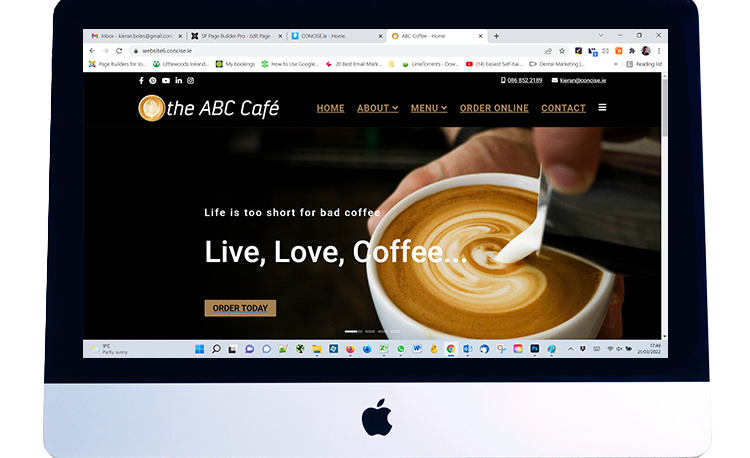
COFFEE SHOP
Click to view what your new website could look like and to generate design ideas...
DENTAL CLINIC 1
Click to view what your new website could look like and to generate design ideas...
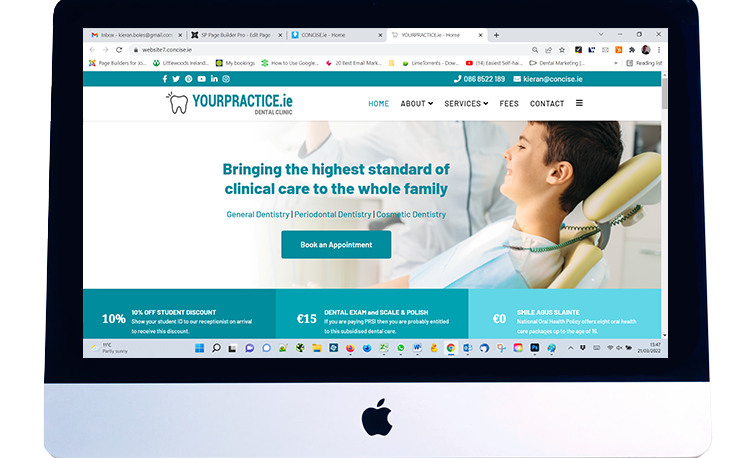
DENTAL CLINIC 2
Click to view what your new website could look like and to generate design ideas...

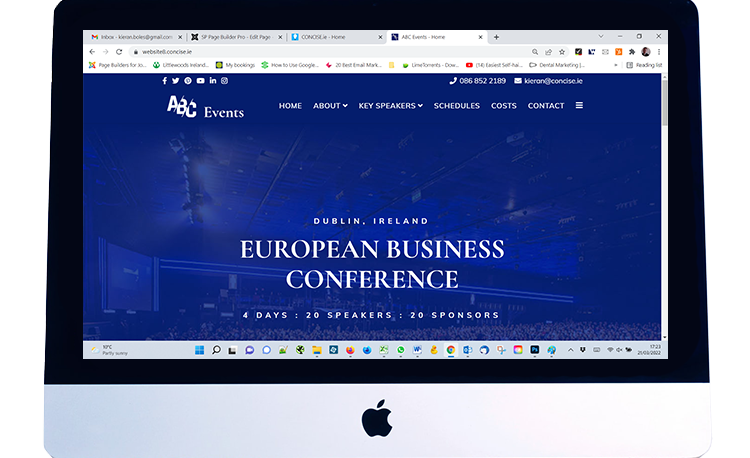
EVENTS
Click to view what your new website could look like and to generate design ideas...
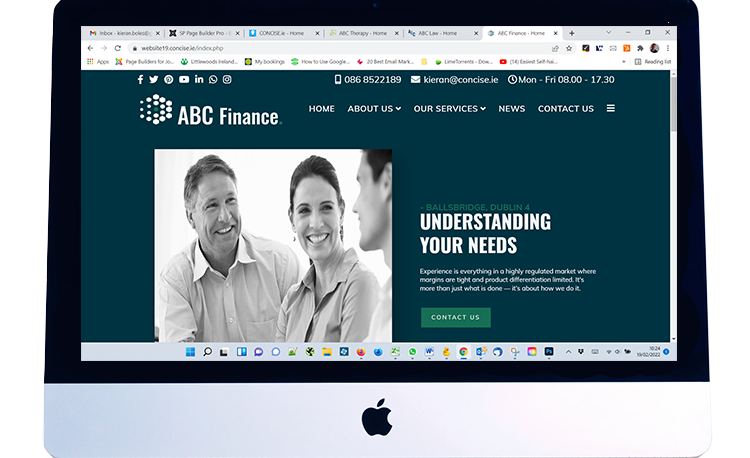
FINANCE 1
Click to view what your new website could look like and to generate design ideas...
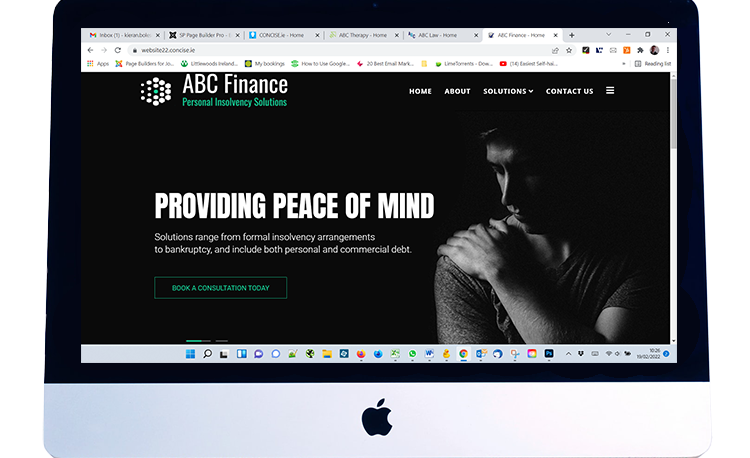
FINANCE 2
Click to view what your new website could look like and to generate design ideas...
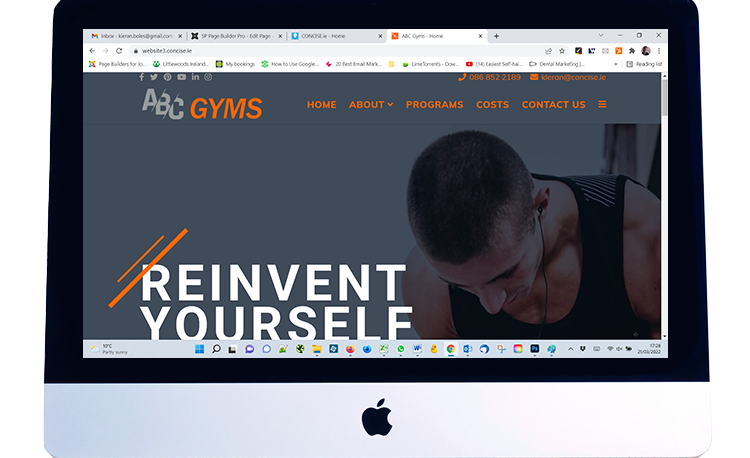
FITNESS
Click to view what your new website could look like and to generate design ideas...
INTERIOR DESIGN
Click to view what your new website could look like and to generate design ideas...
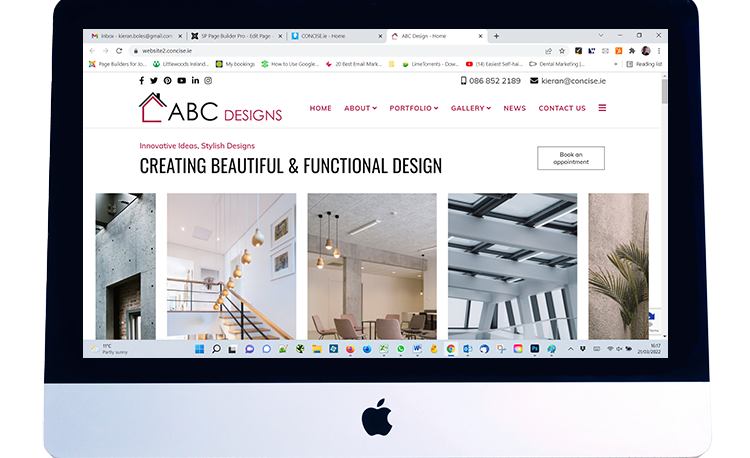
LAW 1
Click to view what your new website could look like and to generate design ideas...
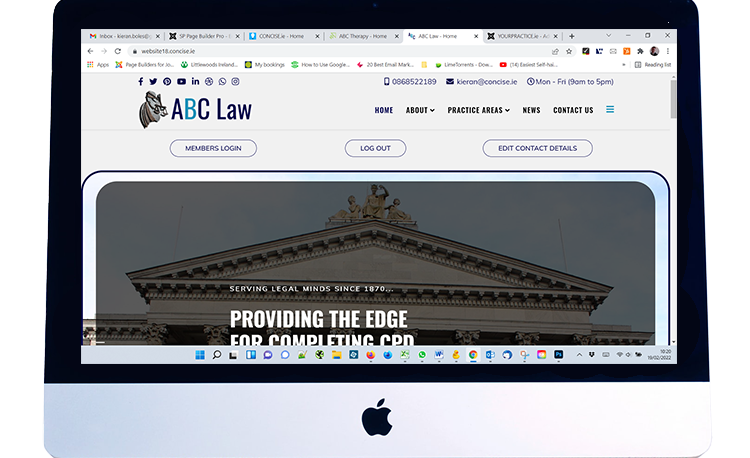
MEDICAL CLINIC 1
Click to view what your new website could look like and to generate design ideas...
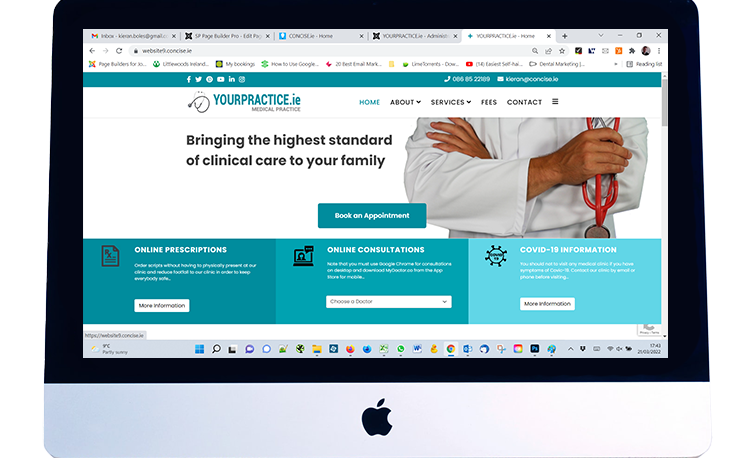
MEDICAL CLINIC 2
Click to view what your new website could look like and to generate design ideas...

PROPERTY
Click to view what your new website could look like and to generate design ideas...

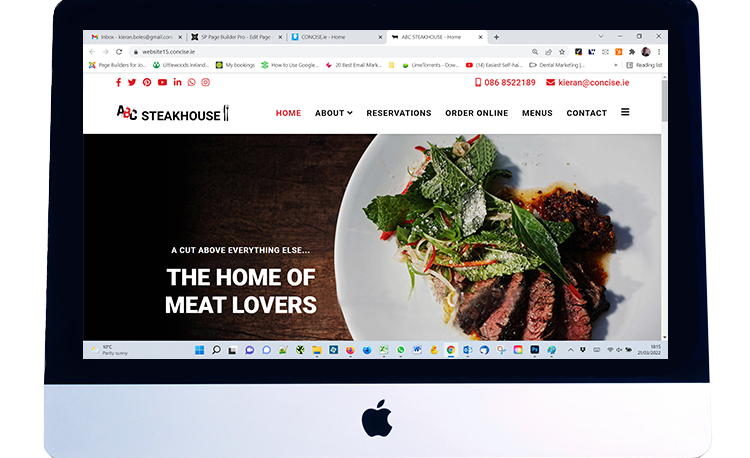
RESTAURANT 1
Click to view what your new website could look like and to generate design ideas...
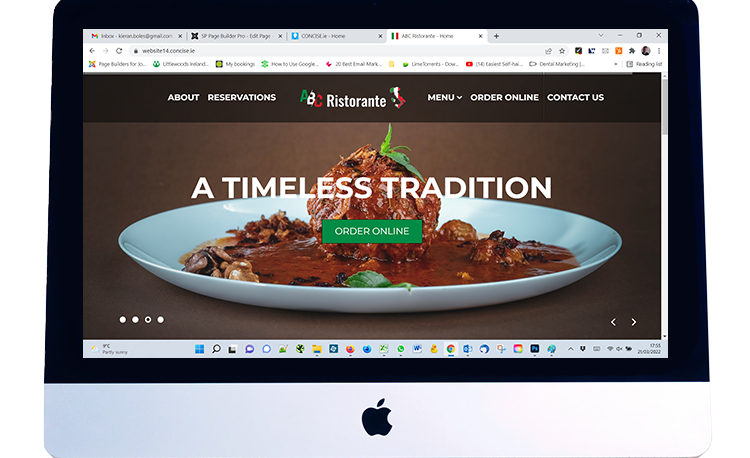
RESTAURANT 2
Click to view what your new website could look like and to generate design ideas...

RESTAURANT 3
Click to view what your new website could look like and to generate design ideas...
MENTAL HEALTH
Click to view what your new website could look like and to generate design ideas...

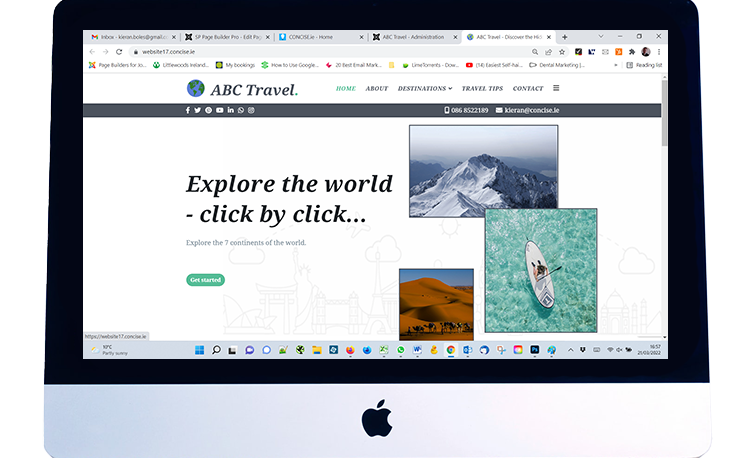
TRAVEL
Click to view what your new website could look like and to generate design ideas...
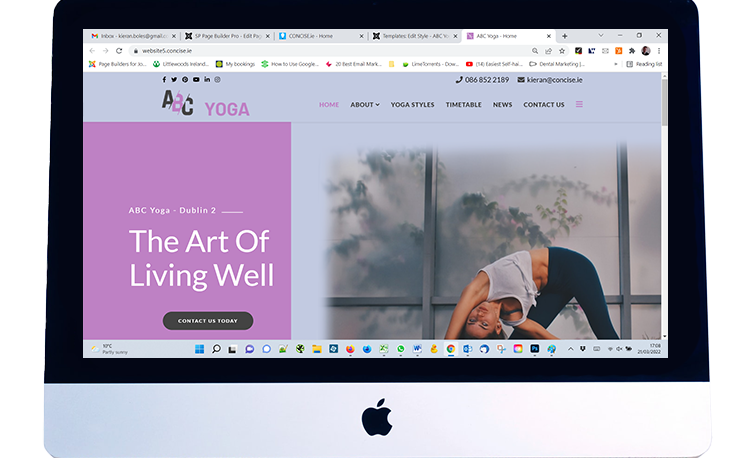
YOGA
Click to view what your new website could look like and to generate design ideas...
Marketing strategy involves the development of a basic structure for your marketing campaign comprising of a plan of action over a defined period of time. This process addresses feasibility and company objectives, taking into account the organisation's technological capabilities. “When companies adopt technology, they do old things in new ways; when companies internalize technology, they find disruptive new things to do” [2].
The aim should be to develop strategic framework that adopts an emergent strategic methodology. This lean / agile process will involve the idea of iteration and the incremental delivery of the solution through trial and error where error is used as a source of information. If every trial provides you with information about what does not work, you start zooming in on a solution – so every attempt becomes valuable, more like an expense than an error.
A common mistake is when businesses post their content directly onto their social media platforms. These platforms should be used as a communication channel to summarise the promise of a benefit in terms of content with a link to firm’s dedicated webpage.
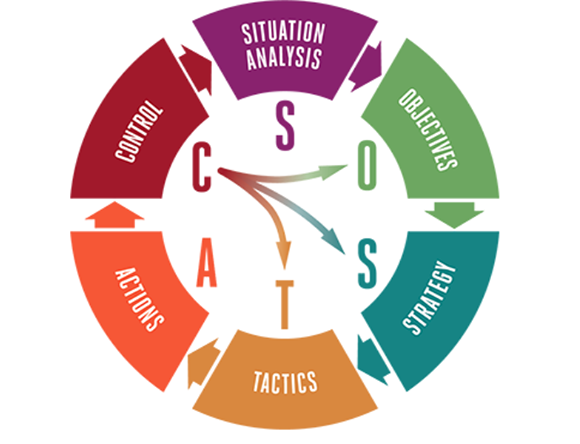
The SOSTAC® framework [3] is a great business tool to create this digital marketing road map. SOSTAC® is an acronym for Situation Analysis, Objectives, Strategy, Tactics, Actions and Control and provides a logical sequence for developing a results-orientated strategic marketing plan for any firm into the future.
Situation Analysis
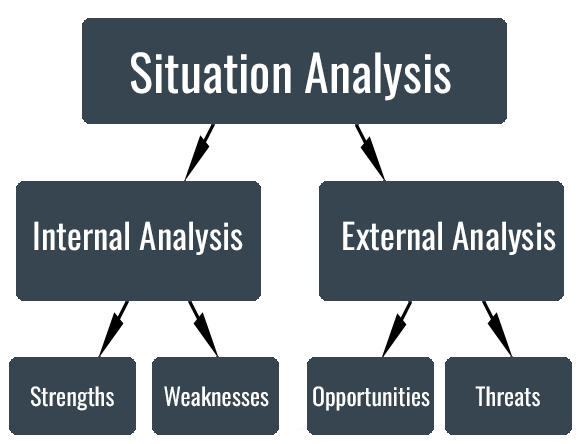
Situation Analysis defines your current situation including its relationship with its customers and its position in the market with its competitors. This is the first stage in developing a comprehensive digital marketing plan because we cannot plan into the future without knowing our current position. Consequently there is a need to determine the current status of your business model to enable us to define key performance indicators (KPIs) that will empower a process that is accountable and easy to measure.
More Information

Objectives
Objectives answers the questions ‘Where are we going, or where do we want to be?’ Why go online? What are the benefits, what is the purpose of going to all of this effort? Good objectives are quantified and have clear timescales. They relate to what exactly you want achieve and ensures that campaigns that are under performing are quickly identified, amended and improved.
More Information

Strategy
Strategy outlines how the firm plans to achieve its objectives in a macro sense. Digital marketing strategy focuses on what you’re about to do online and is affected by both the prioritisation of objectives and the amount of resources available for tactics. The aim is to identify the most and least profitable segments of the business and ensure that funding and resources are applied to those areas that produce the greatest positive return while eliminating whenever possible those activities that do not create value.
More Information
Tactics
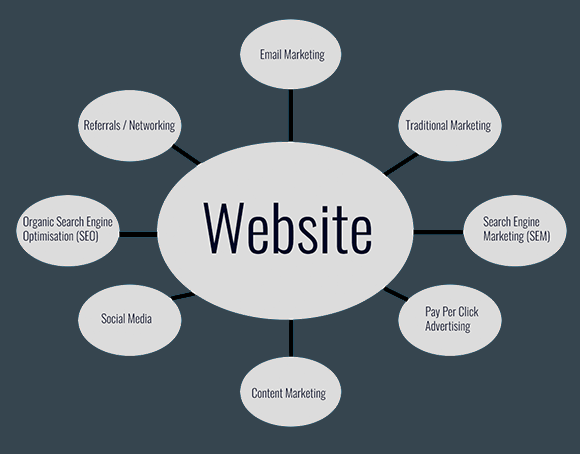
Tactics are concerned with strategy implementation and focuses on the optimum mix in terms of communication channels. This is achieved by considering all the e-tools and traditional marketing tools that are available, and then using them in a sequence that is aligned to the strategic direction of the business. Tactics should be developed only after the strategy has been agreed and set, and tend to be short term and flexible, whereas strategy is more long-term and enduring.
More Information

Actions
'Actions' is the detailed working out of strategies and tactics which eventually translates into a series of actions that has to be carried out and checked for any mistakes. Who does what, when and which processes are required to make things happen? It is important to identify unrealised strategies and quickly adapt if this occurs and implement contingency plans to ensure the organisations strategic direction is maintained.
More Information
Controls
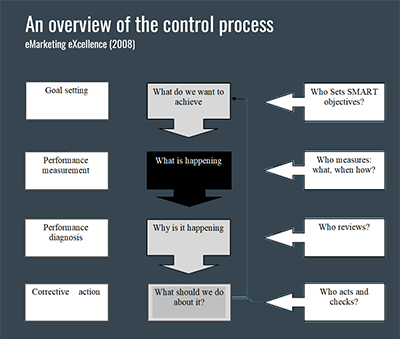
Digital marketing comes down to plain luck without the appropriate control mechanisms. Control questions whether you know if you are succeeding or failing through web analytics systems that regularly measure and monitor KPIs such as the number of visitors, durations, enquiries, subscriptions, sales, conversion rates, churn rates, loyalty levels and more. Control needs to be built into a plan that specifies how often and who reports on the control criteria (e.g. usability testing, concept testing, A/B testing, website statistics analysis and external trend spotting).
More Information
Bibliography
[2] McQuivey, J. 2014 Digital Disruption: Unleashing the Next Wave of Innovation, February 2014 | forrester.com/disruption. [Internet] Available from: https://www.fruugo.ie/digital-disruption-unleashing-the-next-wave-of-innovation/p-65723614-132360543?language=en&ac=croud&gclid=Cj0KCQjw8_qRBhCXARIsAE2AtRYjUH7rlyZOVh99uHKNb4WEBLpbfggLDDjhFMbfxa6rNHtPoskoUwcaAqY5EALw_wcB
[3] Smith, PR (1998). Marketing Communications - an integrated approach (2nd ed.). London: Kogan Page. [Internet] Available from: https://prsmith.org/sostac/